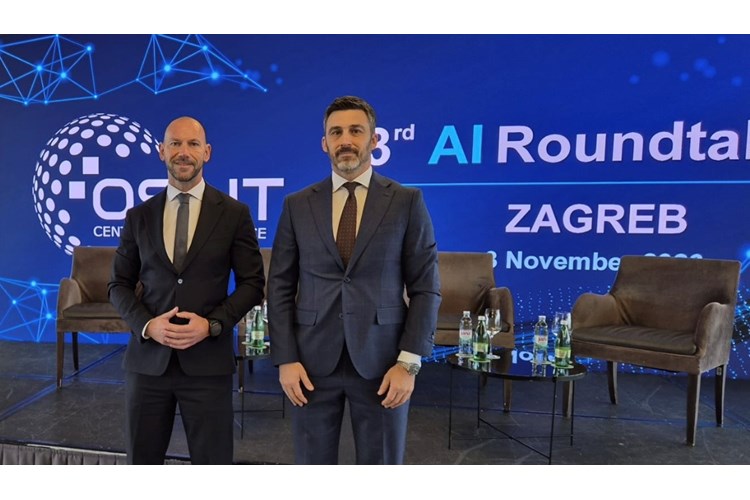
Senior intelligence representatives and leading European researchers gathered in Zagreb to explore how artificial intelligence is transforming open-source intelligence, the opportunities it creates and the challenges it presents.
On 3 November 2026, the international Centre of Excellence for OSINT (OSINT CoE) successfully held its third annual roundtable,
“Trends in the Use of AI in OSINT”, in Zagreb. The event brought together senior representatives of the European intelligence communities and distinguished researchers from several European countries for an in-depth exchange on the evolving relationship between artificial intelligence and open-source intelligence.
Building on the success of the previous two editions, this year's roundtable placed particular emphasis on the practical application of AI in intelligence analysis, the reliability and security of AI-assisted workflows, and the importance of closer cooperation between intelligence practitioners and the scientific community.
From faster answers to better intelligence
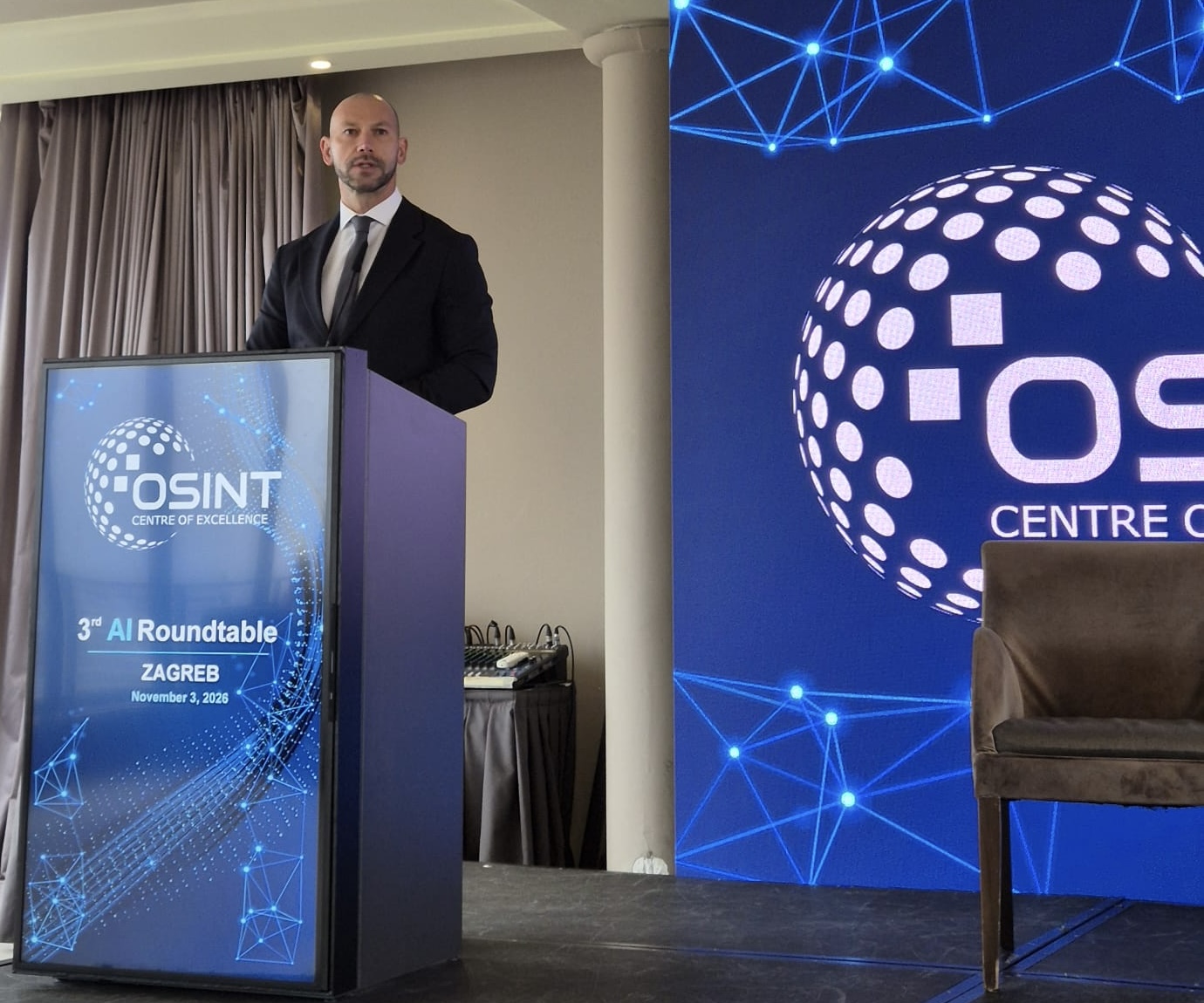
Opening the event, the Director of the OSINT CoE,
Dr Tomislav Dokman, highlighted the transformative potential of artificial intelligence in intelligence work. He emphasised that AI offers opportunities extending well beyond the faster retrieval and processing of information. Its real value increasingly lies in helping analysts identify hidden patterns, connect seemingly unrelated information and uncover insights that might otherwise remain undiscovered.
Dr Dokman also underscored the growing importance of OSINT as an operational intelligence discipline, requiring continuous methodological development, institutional adaptation and stronger international cooperation.
Participants were also honored by the presence of
Mr Damir Habijan, Croatia's Minister of Justice, Administration and Digital Transformation, who delivered an address highlighting the strategic importance of artificial intelligence for Europe's technological future. The Minister emphasised the relevance of the EU AI Act, data sovereignty and the need to strengthen Europe's technological independence, including through the development of sovereign AI capabilities and large language models.
 Bridging strategic priorities and scientific expertise
The programme opened with a strategic panel entitled
“Governing the Machine: Intelligence Leadership in an Age of Artificial Intelligence”.
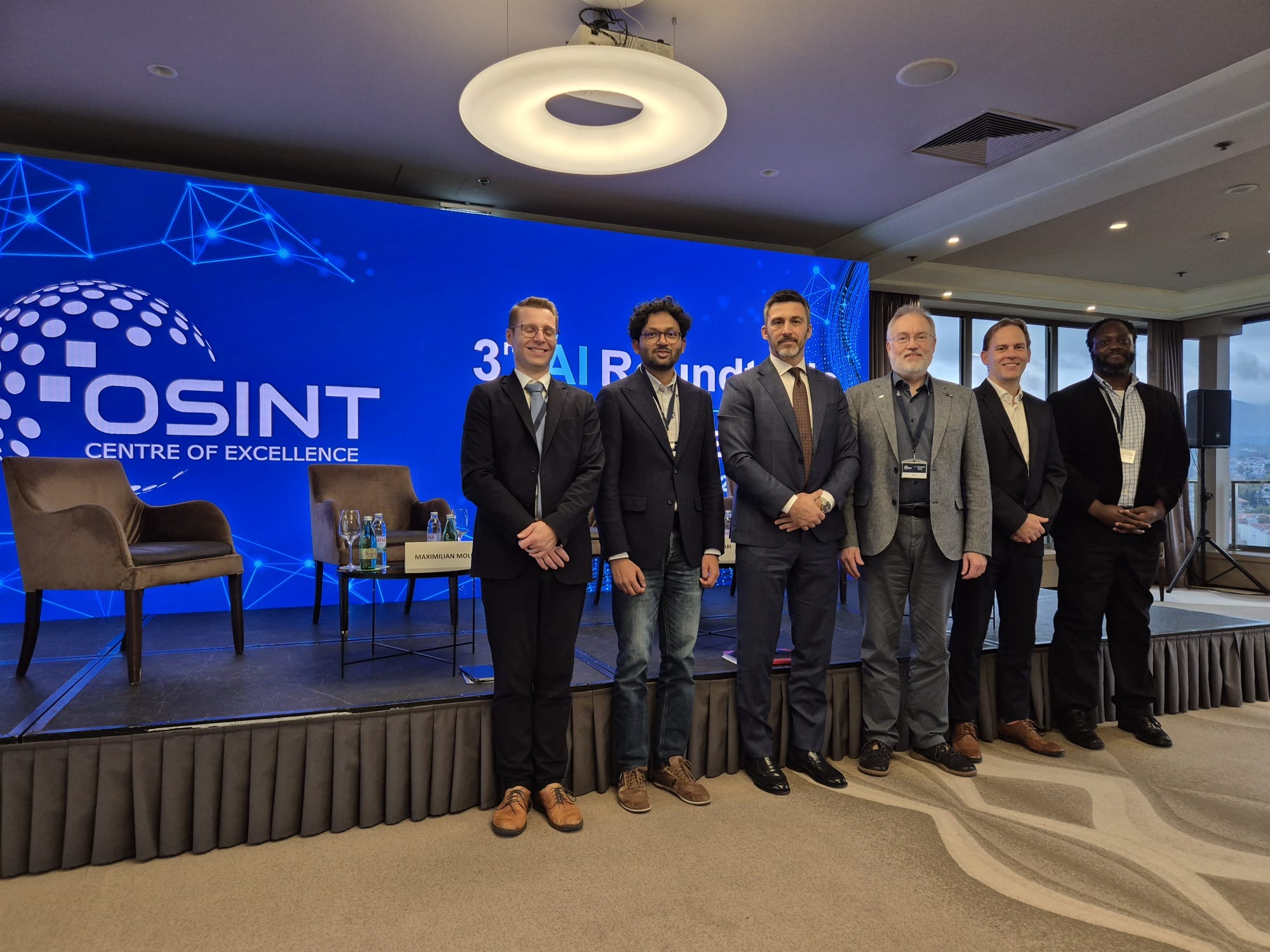
The discussion brought together the Deputy Directors of the EU Intelligence and Situation Centre (EU INTCEN) and of the Swiss Federal Intelligence Service (FIS) as well as a Senior official from the Italian Intelligence community. The panellists addressed the strategic implications of increasingly capable AI systems for intelligence organisations, leadership and international cooperation.
The scientific programme featured five distinguished European researchers:
Dr Karteek Alahari of Inria (French National Institute for Research in Digital Science and Technology);
Dr Ross King of the AIT Austrian Institute of Technology;
Prof Maximilian Moll of the University of the Bundeswehr Munich;
Prof Axel-Cyrille Ngonga Ngomo of Paderborn University; and
Prof Stjepan Picek of the University of Zagreb and Radboud University.
The first academic session,
“Under the Hood: How AI is Rewiring OSINT”, explored the practical capabilities and limitations of contemporary AI systems. Particular attention was given to the quality and reliability of AI-generated analysis, the challenges of working with incomplete or biased data, the verification of information, and the evolving relationship between human analysts and increasingly autonomous AI tools.
The afternoon session,
“Fortifying the Machine: AI Security in OSINT”, turned to the security challenges accompanying the rapid adoption of AI. Topics included deepfakes and synthetic content, the risk of AI-generated information being mistaken for independent evidence, adversarial attacks, data integrity, operational security and the trade-offs between cloud-based and locally deployed AI systems.
Across the discussions, a central message emerged: while AI can significantly expand the speed, scale and analytical capabilities of OSINT,
human judgement, critical thinking, source verification and accountability remain indispensable.
 A successful exchange
The open and constructive atmosphere during the roundtable demonstrated the value of bringing together intelligence professionals and leading researchers to examine common challenges from both operational and scientific perspectives.
With its third successful edition, the annual AI in OSINT Roundtable has further strengthened its position as an important European forum for a strategic approach to AI from a national/continental security perspective, knowledge-sharing, professional dialogue and international cooperation.
News